
US told to ban more after freezing visas for Morocco, Nigeria, 73 others: ‘Why stop at 75?’

–
US, the United States, has frozen visa processing for citizens of 75 countries, including Nigeria and Morocco, but critics are already calling for the administration to expand the restrictions even further
The United States has dropped a diplomatic bombshell, announcing an indefinite pause on immigrant visa processing for nationals from 75 countries, including AFCON 2025 trending nation Morocco, alongside Nigeria and Ghana.
Wakawaka Doctor reports that according to the Department of State, the freeze, which takes effect January 21, 2026, has ignited a firestorm of reactions online, with critics questioning the scope and fairness of the policy.
US Visas: What’s actually happening?
On January 14, 2026, the U.S. State Department unveiled what it’s calling a necessary measure to protect American taxpayers. In a terse statement posted on their official Twitter account, the department declared:
“The State Department will pause immigrant visa processing from 75 countries whose migrants take welfare from the American people at unacceptable rates. The freeze will remain active until the U.S. can ensure that new immigrants will not extract wealth from the American people.”

The statement continued with pointed language: “The pause impacts dozens of countries, including Somalia, Haiti, Iran, and Eritrea, whose immigrants often become public charges on the United States upon arrival. We are working to ensure the generosity of the American people will no longer be abused. The Trump Administration will always put America First.”
What’s Frozen, What’s Not?
This isn’t a total travel shutdown, but it’s significant:
Immigrant Visas (PAUSED): Family-based visas for spouses, children, and parents of citizens, as well as employment-based green card applications for people currently outside the U.S., are all on ice indefinitely.
Non-Immigrant Visas (STILL AVAILABLE): Tourist visas, student visas, and temporary work permits like H-1B and L-1 aren’t officially part of this freeze. However, applicants should expect much stricter scrutiny under the expanded “public charge” rule.
The policy centres on ensuring immigrants won’t become dependent on government assistance. Consular officers will now evaluate applicants based on financial status, health and age considerations, education levels, English proficiency, and overall employability.
It’s a sweeping reassessment that the State Department says is necessary, though critics argue it paints entire nations with an unfairly broad brush.
The Global Impact: Who’s on the List?
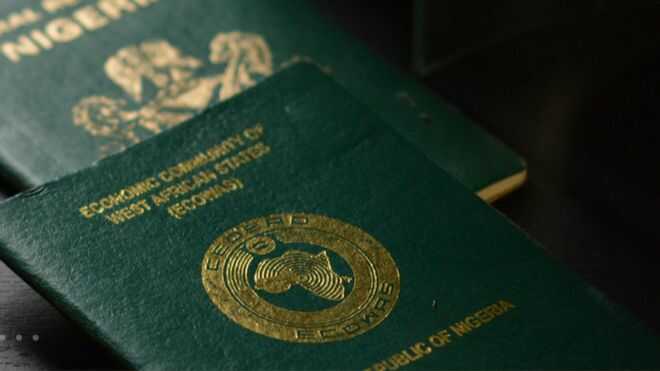
The freeze affects roughly 42% of the world’s nations, with Africa bearing the heaviest burden. Twenty-six African countries made the list, including:
Africa: Nigeria, Egypt, Ethiopia, Ghana, Morocco, Senegal, Somalia, Sudan, Tanzania, Uganda, and others.
Americas: Brazil, Colombia, Haiti, Jamaica, Nicaragua, Bahamas, Barbados, Saint Lucia.
Asia/Middle East: Afghanistan, Bangladesh, Iran, Iraq, Lebanon, Pakistan, Russia, Thailand, Uzbekistan.
Europe: Albania, Belarus, Bosnia and Herzegovina.
The complete list reads like a roll call of developing nations: Afghanistan, Algeria, Armenia, Azerbaijan, Cameroon, Democratic Republic of the Congo, Eritrea, Fiji, Gambia, Guatemala, Guinea, Kazakhstan, Kosovo, Kyrgyzstan, Laos, Liberia, Libya, Macedonia, Moldova, Mongolia, Montenegro, Nepal, Republic of the Congo, Rwanda, Sierra Leone, South Sudan, Syria, Togo, Tunisia, Uruguay, Yemen, and many more.

The Human Cost
The numbers tell a sobering story. The Cato Institute estimates this freeze will block nearly half of all legal immigrants, approximately 324,000 people, who would have otherwise received visas annually. Perhaps most heartbreaking: around 100,000 spouses and minor children of U.S. citizens are expected to face indefinite separation from their families.
The internet reacts
Social media has become a battleground of opinions, ranging from sarcastic to serious:
“Why stop at 75 countries? Just ban all 192 and officially rename the place ‘West Korea.'”
“You’re missing one, India.”
“Right, the American people’s money is reserved solely for Ukraine, Israel, Argentina, and military contractors.”
“Thank you! Please consider India as well for taking employment opportunities from the American people at unacceptable rates.”
But perhaps the most measured response came from someone who captured the complexity of the moment: “This is actually very serious. While it is necessary to act in the interest of the United States at all times as decision makers, it is also pertinent to apply fairness and balance, as not everyone should be penalised for the ill-behaviour of a few.”

What happens next?
The State Department has described this pause as indefinite, pending what they call a “comprehensive reassessment” of screening procedures. For hundreds of thousands of people whose lives hang in the balance, students planning to study in America, families waiting to reunite, and professionals seeking opportunities, the waiting game has begun.
As Morocco trends globally for AFCON 2025, its citizens, along with those from Nigeria, Ghana, and 72 other nations, face an unexpected hurdle in their American dreams. Whether this policy represents prudent fiscal management or an overreach that punishes the many for the actions of a few remains a question that will likely be debated long after the freeze is lifted, whenever that may be.